I’ll be the first to admit that I’ve tried quite a few daily rituals and gimmicks, and very few stand the test of time.
But somehow, someway, the Pomodoro method to carve out 25 minute chunks of dedicated time has stayed with me to become the cornerstone of my daily routine. It’s my one tried and true time management method to achieve focus.
I even asked a friend with ADHD to try it. He had been complaining about how procrastination and lack of focus plagued his work day, and I shared this article and my gave him some tips: He loved it and it worked! BUT, after using it successfully for about two weeks, he abruptly forgot about weaving it into his daily ritual and gave up on it. You need to be purposeful and intentional, and not let up on using this technique 3-4 times a day for a hyper-focused attack on your most challenging work.
What is the Pomodoro Method?
It’s a technique to help remove distractions and get you in a flow like state of productivity in 25 minute bursts of focus, called Pomodoros. It's a helpful tool for folks working full time as well as students looking for an edge in studying for the big test.
I’ll give you a quick and simplified version as I understand it. I’m stripping it down because I believe the constraints and complexity of the full-blown method actually reduce efficiency of the tool.
Simplified Pomodoro technique to increase focus:
1. Create goals: Pick a task or tasks to accomplish
2. Set a timer for 25 minutes
3. Dedicate yourself to work uninterrupted for those 25 minutes to achieve your goal(s)
- If you are interrupted or distracted, consider restarting the Pomodoro
4. Stop the timer and take a short break of 5-10 minutes
- A rule of thumb for effective time management is to take a 5 minute break for a 25 minute pomodoro session, and a 10 minute break if you perform a longer 50 minute Pomodoro
Note: I’ll Repeat for as many Pomodoros as I can do while maintaining mental stamina.
Two easy tweaks to catapult efficacy of the technique:
1. Work with incredible intensity (like Kobe Bryant) for 25 minutes
2. Define what focus means
1. Working with Incredible Intensity
Intensity is key. If you carve out 25 minutes and work half-heartedly, you don’t really deserve the 5 minute break and this process is not worth it.
I remember what my boss from my first marketing job used to do: lean over his keyboard and put his face almost on the computer screen with a strange, tilted head position. His eyes looked up at the monitor with an incredible focus and he would type like a madman. He was relentless.
That was intensity.
I never adopted his strange head tilt and lean over the keyboard posturing, but he did inspire me by demonstrating what it really means to crank out work.
Not everyone has this natural reserve of focus and intensity; you need to ask yourself for it. Remind yourself what intensity and focus looks like. Motivate yourself with the reward of finishing work sooner and being proud of yourself. Productivity feels good.
Sometimes I think to myself, if I’m not typing as though my life depended on it like my old boss did, then I’m just not giving it my all.
Thinking about someone you admire with an ability to shut everything out except for what the immediate goal is. It may sound silly, but if you get a mental image of someone who possess the ability of intense focus, it can help you espouse that superpower.
Kobe Bryant is famous for his unwavering "mamba mentality." One of his most famous quotes is "Hard work outweighs talent — every time." See that look in his eyes? It's the look of relentless and optimal productivity.
Here’s an article that illustrates Kobe’s insane work ethic with 24 real world examples.
So yes, I'm telling you to picture Kobe Bryant and emulate his intense ability to focus. Give it a 110%, even if it is just for a simple task and not game 7 of a championship. #mambamentality
2. Defining What Focus Means
You need to define what focus means, otherwise you’ll forget.
Here’s what I mean: You’re cranking away at a PowerPoint deck making some astonishingly attractive and poignant slides about new growth opportunities. Then your Outlook starts pumping out e-mails from your boss and you take a look. Next thing you know, you’re working on a different task. You’re still working, and this is an e-mail from your boss, but…
Your flow is broken.
When you return to your PowerPoint masterpiece, you’ve lost some of that magic you had before. This is the biggest trap for me. It’s not so much ensuring you have a good mental goal or task list for the Pomodoro, it’s knowing what your mental weaknesses are and what entices you away from focus. You must be incredibly strict about what you define as a distraction vs. a relevant task for the Pomodoro.
Make a list of what NOT to do.
You can also try segmenting Pomodoros. Pick Pomodoros by the mental state required. If you want to barrel through mundane work emails, set a Pomodoro just for that. If you want to be creative, choose tasks that fit within that mindset for that Pomodoro.
You need to customize and personalize your Pomodoros to make them work for you.
A few more tips…
Adjust the length of Pomodoros for whatever your optimal mental stamina is, whether it’s 15 minutes or 2 hours (that's a Kobe length extended Pomodoro). Consider having Pomodoros hit on the hour or half hour if it’s easier for you to time them. When you take a break, be careful not to erode your focus significantly.
If you play games on your phone for your five minute break, chances are you’re wasting mental capacity. The break should be about renewal; I’ll sometimes go for a quick walk or at least stand up at my desk.
Conclusion
This technique makes practical sense and it’s easy to employ nature make it the one productivity ritual that will stand the test of time. I hope the two easy tweaks can help add even greater clarity to how you define focus and what it means to bring intense focus to your work.
Have you ever used this technique, and if so, what have the results been? Any tips to improve it, or even other focus/productivity techniques worth considering? Let us now in the comments.
P.S.
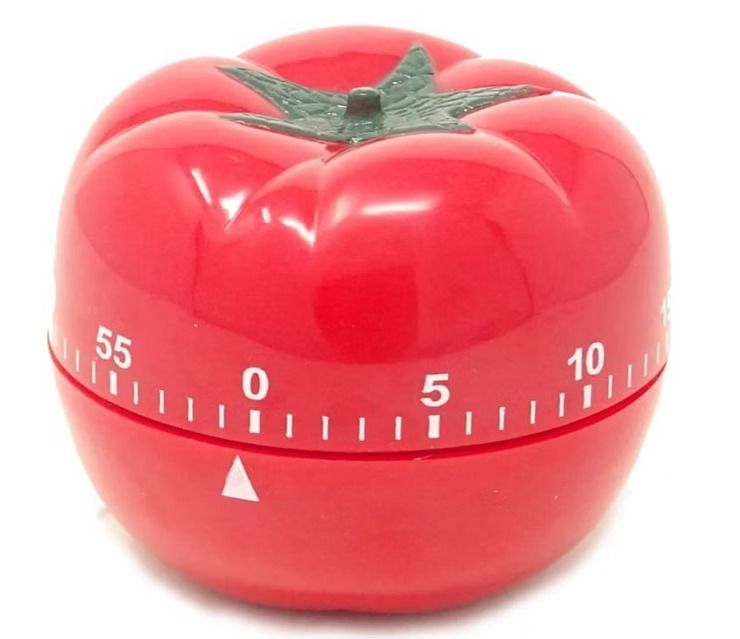
I bought this Tomato timer on Amazon. Pomodoro means Tomato in Italian, and some folks online advised that the physical act of winding the timer helps somehow. I’m officially on the Pomodoro bandwagon.
Are you in sales and wondering where the time goes ever day?
Give this article from our friends at SKALED a read. It directed towards time management for salespeople but has rich content and tips applicable to anyone.